Daylight Saving Time in ELA
Daylight Saving Time in ELA
Using timely, real-world topics, such as daylight saving time, is perfect for making instruction more engaging and meaningful for your students. Plus, students find relevant, current topics refreshing and motivating. They’re curious about them, so why not use this to your advantage in English language arts. Turn everyday events into lessons that build background knowledge, strengthen literacy skills, and deepen understanding of science and math concepts. I have some ideas and freebies for you about incorporating daylight saving time into ELA.
Generally speaking, we have daylight saving time to shift one hour of daylight from the morning to the evening, giving people more of an opportunity to be active while the sun is still shining. Specifically speaking, daylight saving time first came about during World War I via the Standard Time Act of 1918 in an effort to save electricity and fuel. This is also when time zones in the US were set up. Fast forward to July 14, 2026 when the the House Committee on Energy and Commerce advanced bill H.R. 139, which the full House then passed by a vote of 308–117. The bill now moves to the Senate for consideration. If the bill becomes law, it would move the US to permanent daylight saving time.
As of 2026, 48 states observe daylight saving time (DST). Arizona, Hawaii, and US Territories do not, as they have chosen to opt out and remain on permanent standard time. 19 states want to end the practice of setting clocks forward one hour in the spring (on the 2nd Sunday in November), and setting clocks backward one hour in the fall (on the 1st Sunday in November), thus making DST permanent by law. However, these laws cannot go into effect until Congress allows it at the federal level.
Here are some ideas for incorporating the concept of DST into your ELA classroom:
1. Write a cause-and-effect essay: Have students research and then explain what caused us to have daylight saving time and what happened as a result. And, by the way, it’s interesting that we did not have standardized time, nor time zones, in the US until train travel became common! OR, have them write what effects DST have on daily routines, public health, the economy, and wildlife, and what causes those effects.
2. Write a compare-and contrast essay: Have students compare and contrast the practice of standardized time in the US versus other countries.

3. Write an Opinion Essay (Grades 4-5) or an Argumentative Essay (Grades 6-12): What a perfect opportunity to take advantage of this built-in opportunity for authentic argument, discussion, and text analysis. And, guess what? I made freebies just for you in the form of complete writing modules — one for the opinion piece, and one for the argument piece. Try them today! (Maybe even add in hosting an in-class debate or Socratic seminar to add in speaking and listening skills.)

4. Try This FREE Literacy in Science Lesson “Why There are Seasons”: All this talk about shorter and longer days is the perfect time for them to learn about why we have seasons, while meeting essential ELA standards. Perfect for getting students to integrate information presented visually and in words (RI.7, RST.6-8.7), follow a multi-step procedure with a hands-on simulation (RST.6-8.3), plus focus on central ideas, details. and vocabulary in a scientific text with graphics and a hands-on simulation. There is even a writing assignment to explain why summer days are longer & warmer which aligns to W.2.

6. Read and Write Satirical Essays on the Topic: Benjamin Franklin did not invent DST. (Nor did farmers!). But he did write a famous satirical essay in 1784 titled “An Economical Project for Diminishing the Cost of Light” published in the Journal de Paris while he was serving as the American minister to France. He calculated that Parisians were wasting money by waking up after the sun was already up and burning expensive wax and tallow candles at night.
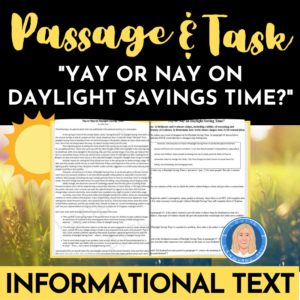
7. Use this Reading Freebie: I created what I think is an awesome reading freebie: “Yay or Nay on Daylight Saving Time?” Everyone wants to know what is up with Daylight Saving Time! This explains it! And it does so in an engaging, argumentative way that sounds like an editorial opinion piece. This informational text passage is paired with 1 page of ELA tasks that assess reading, writing, and language skills aligned to multiple core standards assessed on standardized tests. Focuses MOST intently on 1) delineating and evaluating claims, including validity of reasoning and sufficiency of evidence (RI.8), 2) determining how word choice shapes tone (RI.4), 3) identifying author’s point of view (RI.6)

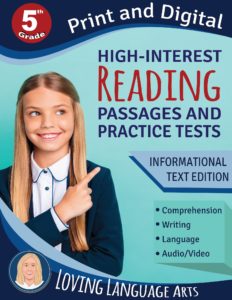
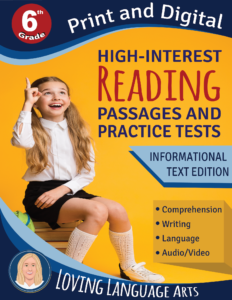
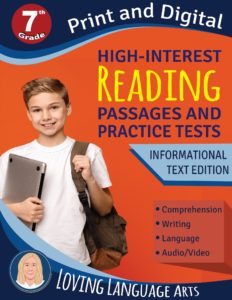
Check out these GRADE-SPECIFIC workbooks with ELA tasks or practice tests that target EVERY GRADE-SPECIFIC READING LITERATURE TEXT STANDARD, one by one. An added bonus is that students LOVE the texts! In Easy-Print or Self-Grading Online Versions.


“My students absolutely LOVE these! They were asking for more! Thank you!”

How about save this pin to your Pinterest boards so that you can come back to this post again?